 Matthew Gai
ZONK
A roguelike dice game inspired by the classic game of Farkle.
The Pitch
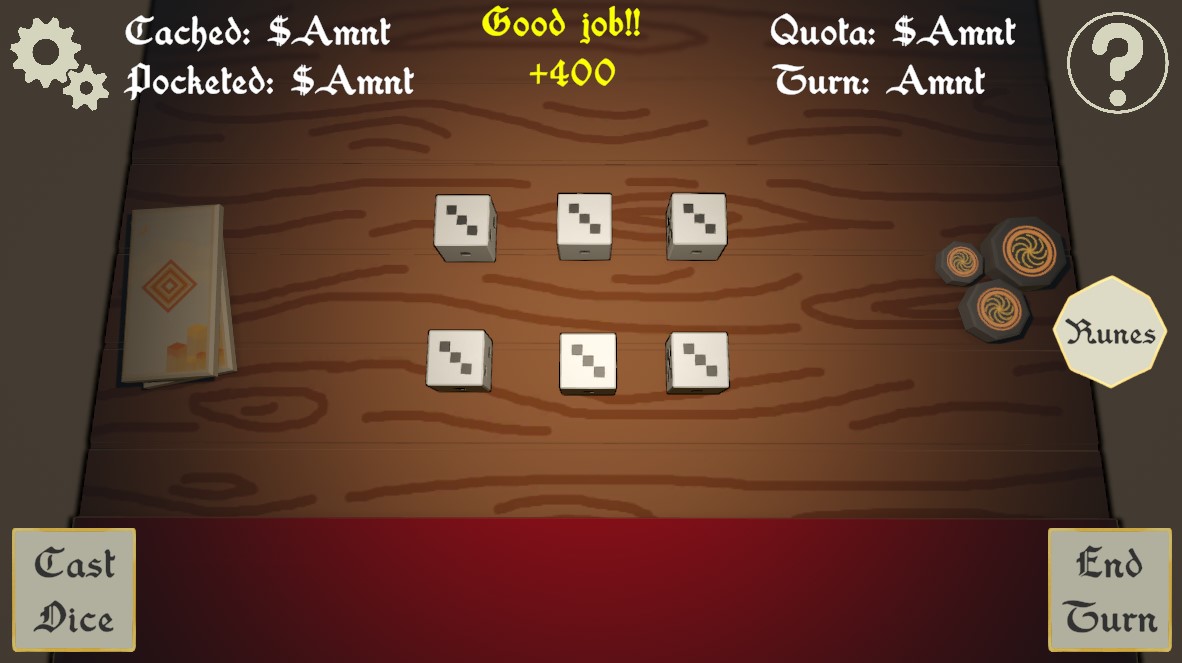
Cursed by a cheated die brought to life, you must score points in the never-ending roguelike game called ZONK. Earn upgrades and acquire magical items to progress further and further, each time trying to beat your highest score. See how far you can get in ZONK!
ZONK is a mobile roguelike dice game inspired by the classic game of Farkle. In ZONK, players will roll dice, collect scoring combos, and progress to eventually unlock new abilities that allow for further scoring potential. I was the lead designer for the game, making sure that the overall game was balanced, and that each scoring combo felt unique and properly impacted the game.
Key Contributions
- System Design: Balanced the game economy, card abilities, and scoring combinations.
- UI/UX: Developed the card inventory system and handled UI layout for various mobile aspect ratios.
- Physics: Created a "rigged" dice system that combined Unity physics with predetermined outcomes.
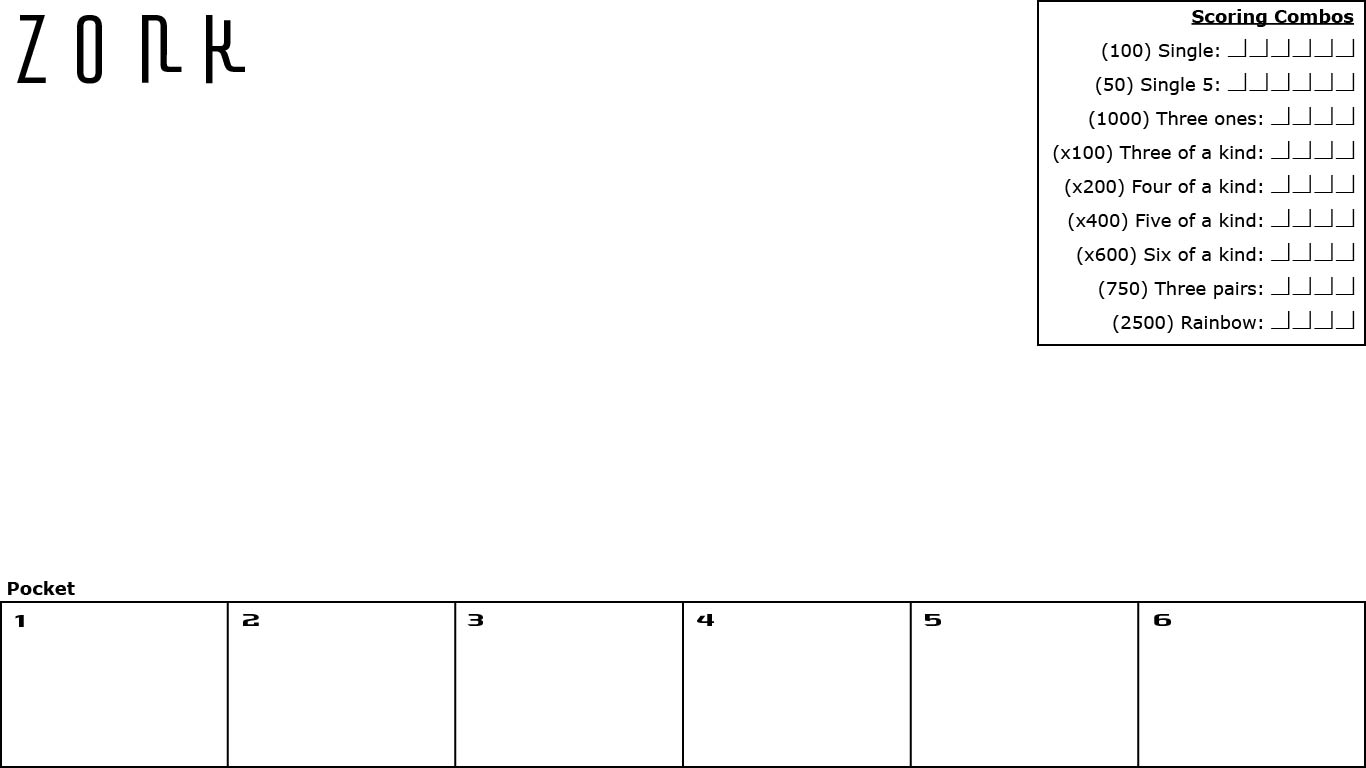
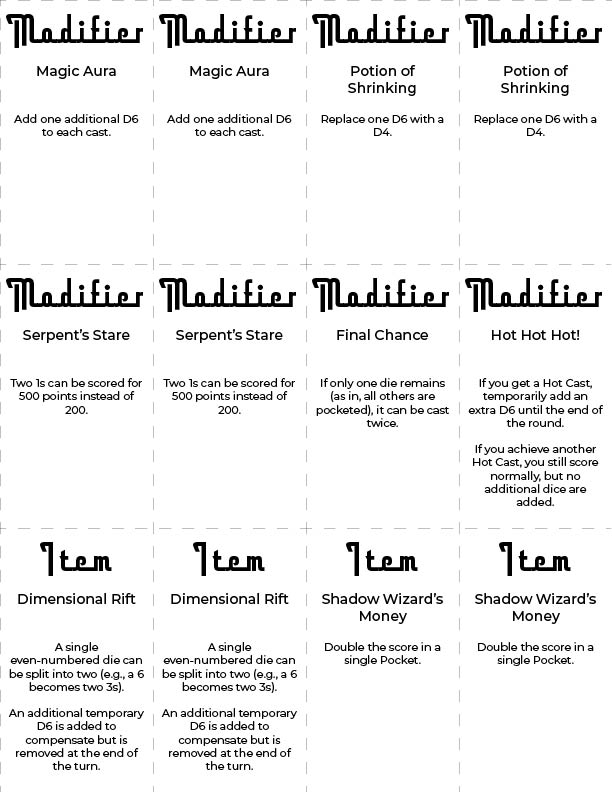
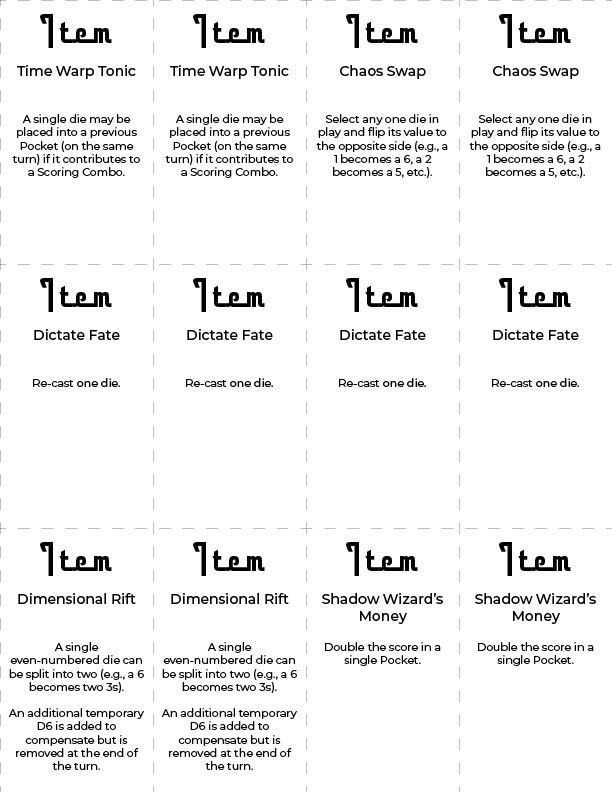
- Prototyping: Created physical paper prototypes to test ideas before digital implementation.
UI Mechanics
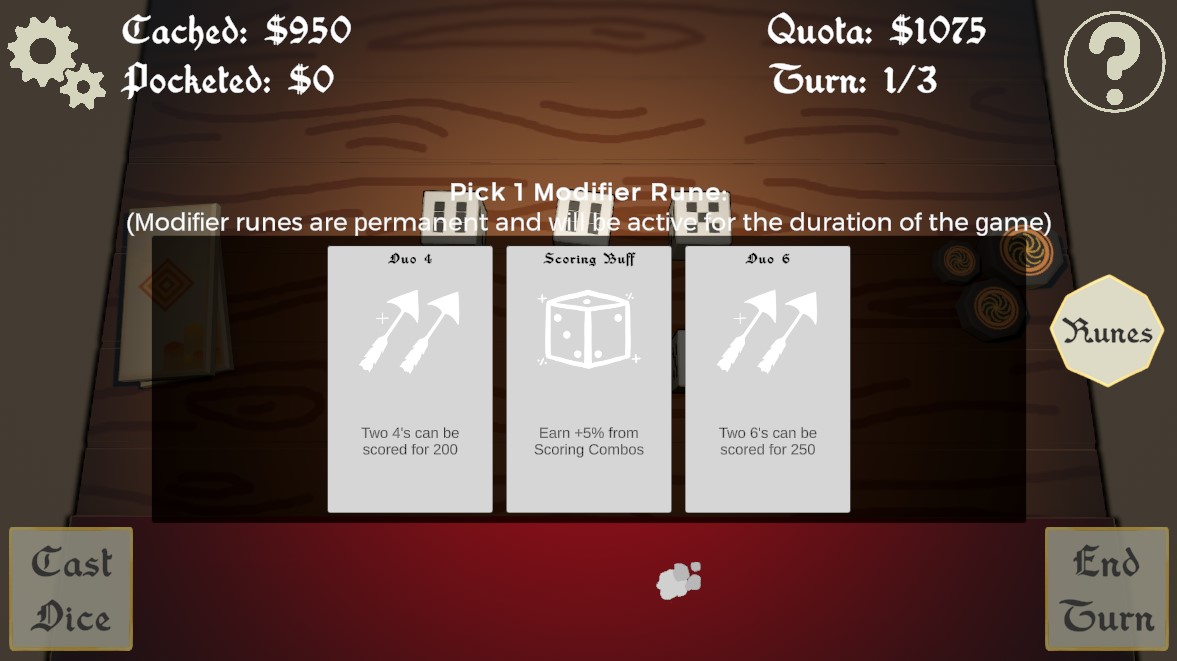
Besides designing the game, a large chunk of my work was spent developing the UI. This meant deciding placement, as well as developing the backend systems to make it work. One of the more difficult tasks I took on was the game's card system. Essentially, the player will collect cards with different abilities, text, art and attributes tied to them. To accommodate for this, I created my own card system that allowed me to easily create new and unique cards, adjusting values such as rarity, and the amount of them that can be drawn.
I also had to make sure that these cards could continually fill up in the player's inventory, while accommodating for readability among different screen sizes and aspect ratios that usually comes with developing for mobile.
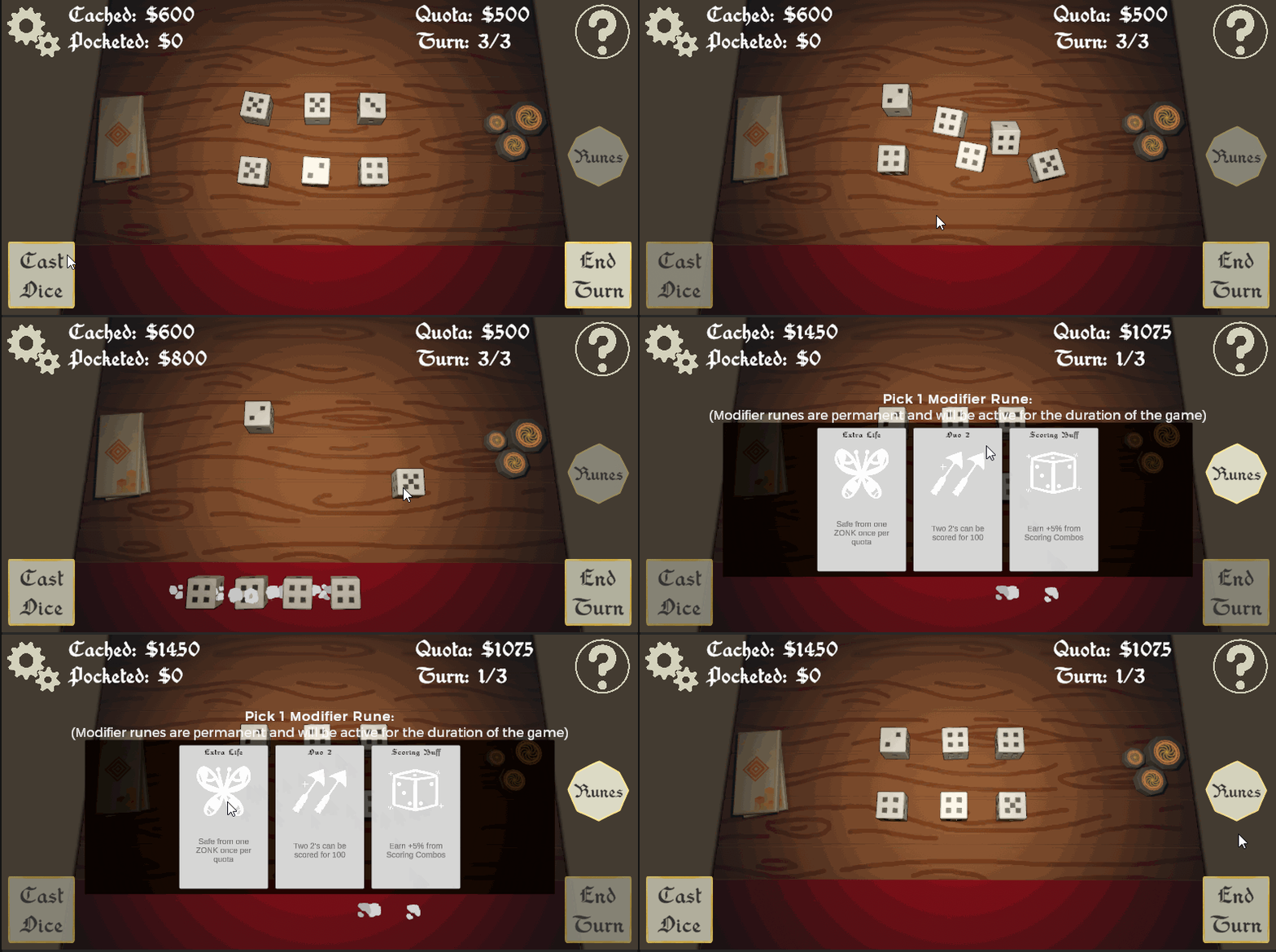 A showcase of how the cards worked.
Prototyping
During the first few weeks of play, we went through a lot of different prototypes. Seeing how the game can be played easily with a pair of dice, there was a lot of time spent paper prototyping, coming up with potential ideas for upgrades and unique scoring combos. The link to those rules can be found here.
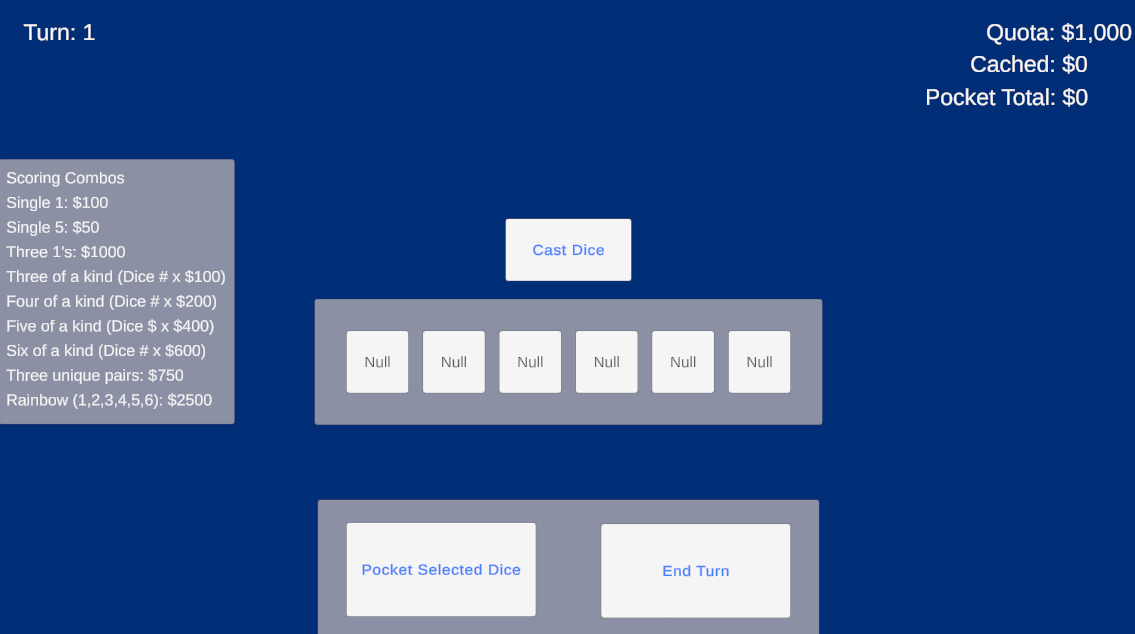
After paper prototyping, we went on to make a simple digital prototype. It took a lot of work to recreate the rules digitally, and that was before we wanted to have 3D dice rolls.
By far the most difficult hurdle was creating "rigged" dice rolls that used Unity's physics system. Because we wanted different modifiers and rarity upgrades, while still retaining the satisfying feeling of rolling physical dice, the dice had to be fixed before the dice were rolled. This proved to be a very difficult task, but in the end we made a system that worked well enough. There were some oddities with how the dice would flip to their set face, but it added some charm.
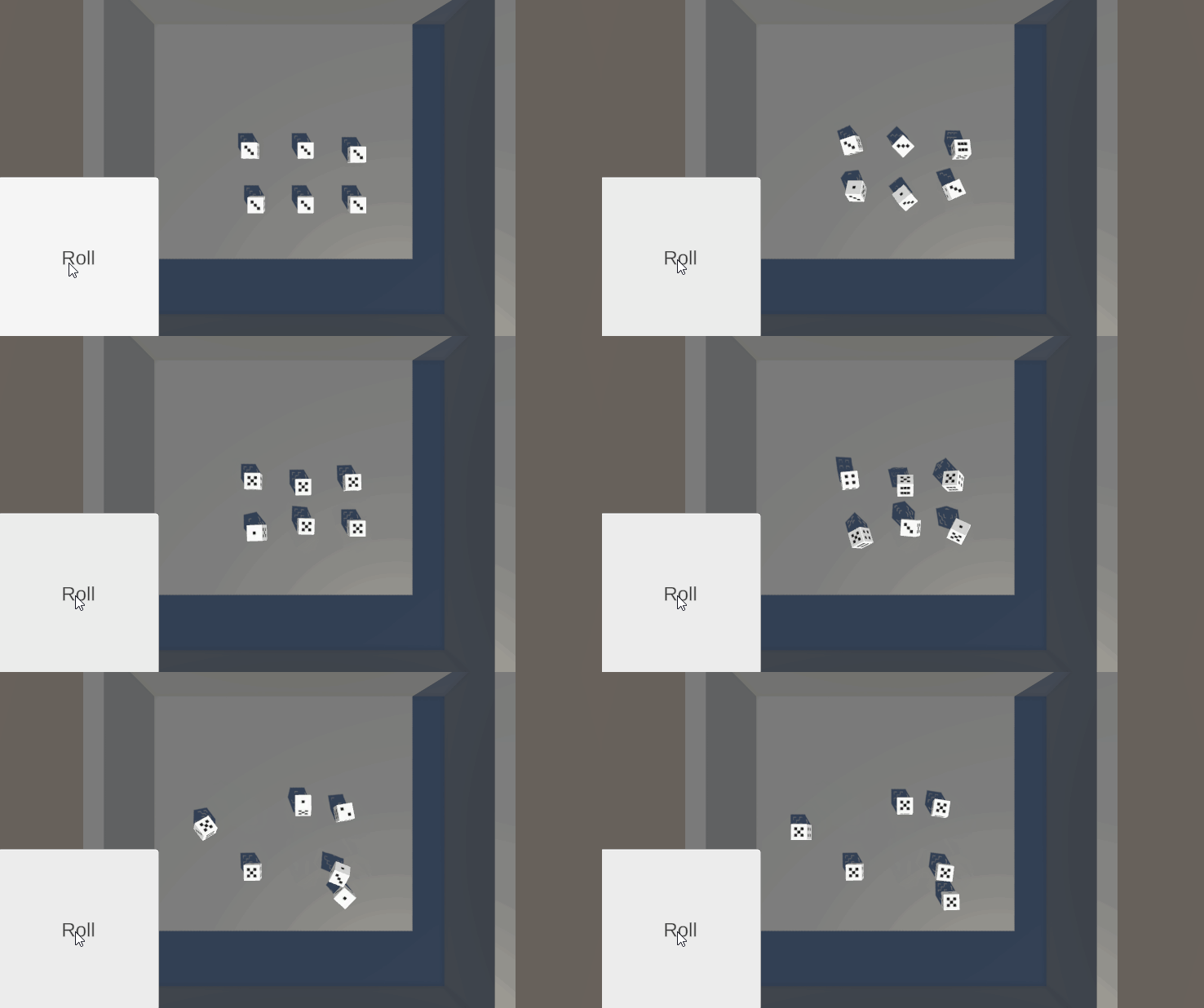 An early test of our "rigged" dice.
Gallery
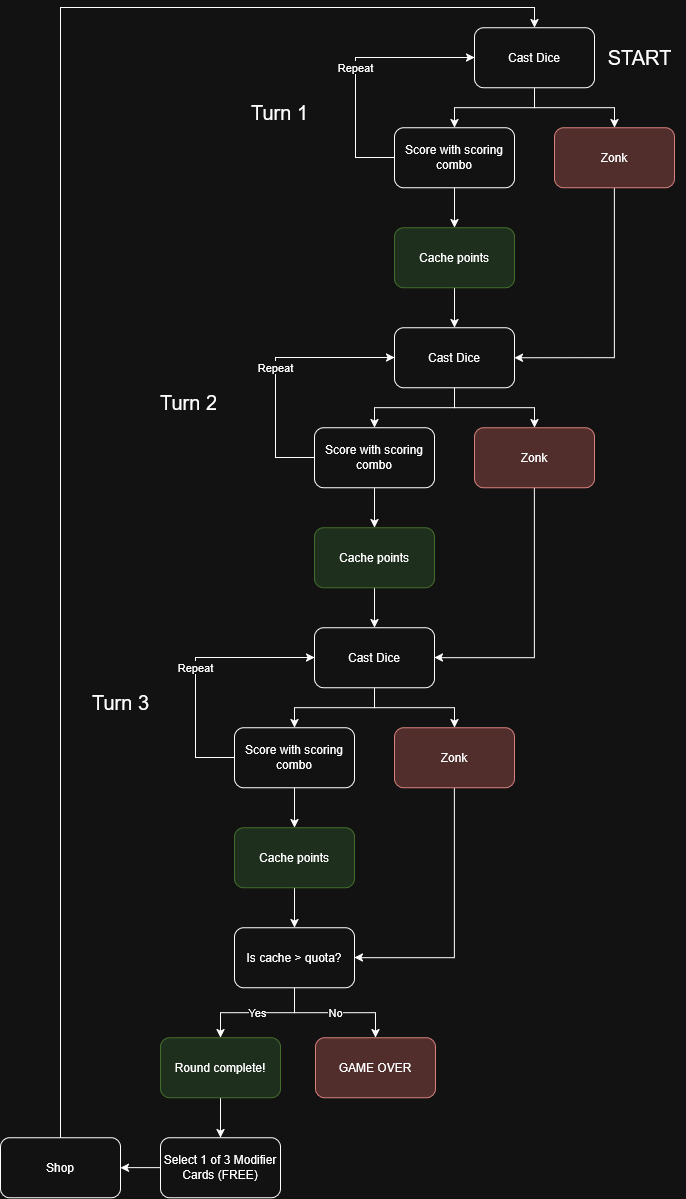
The following screenshots show the paper prototype I created, a flow chart to help show the order of the game, and a look at the first digital prototype.
Play the Build
The game is available to play via the Google Play store.
Play